Why Objective Documentation Matters in Injury Cases
Quick Summary: Objective documentation gives a personal injury case a clear, credible foundation. Records such as examination findings, diagnostic studies, treatment notes, photographs, invoices, and work-loss verification can help show what happened, how an injury affected someone, and why recommended care was medically necessary. Strong documentation does not guarantee an outcome, but it makes the facts easier to evaluate.
After an accident, people often focus on immediate pain, appointments, and getting back to daily life. The paperwork may feel secondary. In a personal injury matter, however, accurate and timely records can be just as important as a person’s recollection. They create a contemporaneous account of symptoms, functional limitations, clinical findings, treatment decisions, expenses, and recovery over time.
What Makes Documentation “Objective”?
Objective documentation is information that can be observed, measured, tested, photographed, or independently verified. It differs from a general statement that a person hurts, although a patient’s description of pain is still an important part of clinical care.
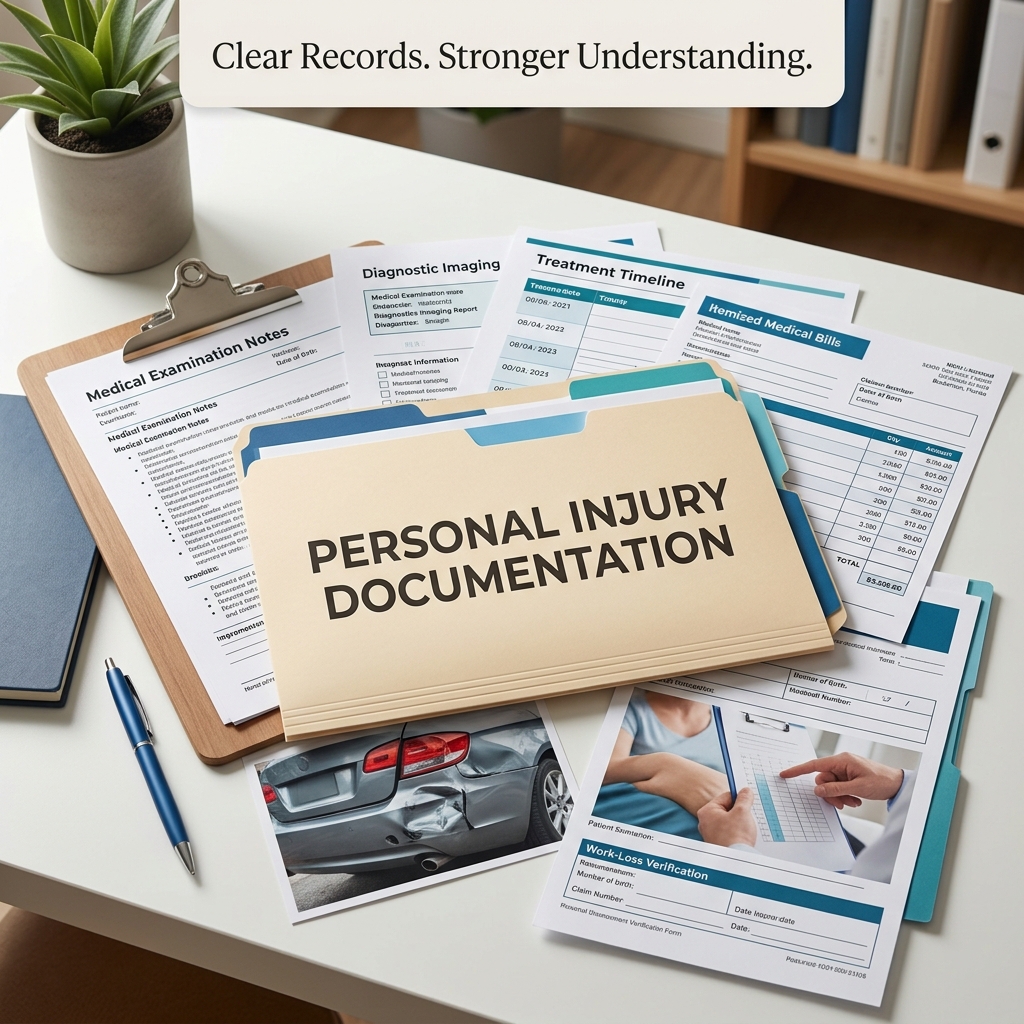
Examples may include range-of-motion measurements, strength testing, neurological findings, imaging reports, examination results, photographs of visible injuries or vehicle damage, itemized medical bills, work restrictions, and payroll records showing missed time. Detailed treatment notes can also connect those findings to a provider’s assessment, care plan, and the patient’s response to treatment.
The purpose is not to turn every appointment into a legal exercise. It is to ensure the clinical record accurately reflects the patient’s condition and the care being provided. When records are complete, they are more useful to patients, providers, insurers, and attorneys alike.
Documentation Helps Establish a Clear Timeline
Timing matters in injury cases. A well-maintained record can show when the incident occurred, when symptoms began, when the person first sought care, and how the condition changed with time. This chronology helps reduce uncertainty when a claim is reviewed months later.
For example, an initial evaluation may document the mechanism of injury, the body regions affected, reported symptoms, physical examination findings, and any red flags requiring referral or emergency care. Follow-up notes can then show whether symptoms improved, stayed the same, or worsened; whether treatment was adjusted; and whether the patient followed recommended restrictions or referrals.
Gaps are not automatically fatal to a claim—people have jobs, family obligations, transportation challenges, and other real-life barriers. Still, unexplained delays or inconsistent records can create questions. Clear notes about missed appointments, scheduling barriers, or changes in symptoms provide needed context without speculation.
Clinical Findings Support Medical Necessity
Injury claims commonly involve questions about whether care was reasonable and medically necessary. A diagnosis alone is often not enough. The record should explain the findings that informed the diagnosis, why a particular treatment plan was selected, the anticipated goals of care, and the patient’s progress.
For healthcare providers, this means documenting more than a template. Notes should reflect the patient’s individual presentation: relevant history, examination results, assessment, treatment performed, home-care instructions, referrals, and response to care. If the plan changes, the record should explain why. If a patient reaches a plateau or needs a different level of care, that should be documented as well.
For patients, this reinforces the value of communicating accurately. Describe symptoms honestly, report changes promptly, follow care instructions when possible, and ask questions if a recommendation is unclear. Good documentation begins with good communication.
Function Often Tells the Most Complete Story
Personal injury cases are not only about a diagnosis or a medical bill. They are also about how an injury affects daily life. Objective documentation of function can make that impact more understandable.
Relevant details may include difficulty sleeping, limits with lifting, reduced ability to sit or stand, trouble driving, missed work, modified job duties, inability to exercise, or challenges completing household tasks. Whenever possible, these limitations should be described specifically. “Unable to lift more than 15 pounds without increased shoulder pain,” for instance, provides more useful information than a vague statement that the patient is “limited.”
Employment documentation can be equally important. Work notes, employer confirmations, wage statements, tax records for self-employed individuals, and documentation of modified duties may help substantiate lost-income claims. The details should be accurate, consistent, and supported by the surrounding record.
Photos, Bills, and Other Records Fill Important Gaps
Medical records are central, but they are only one part of the overall picture. Photographs taken soon after an incident may preserve visible bruising, swelling, lacerations, damaged property, or hazardous conditions that later change. Keep original files when possible and avoid editing images in a way that obscures when or how they were created.
Itemized statements, receipts, explanations of benefits, prescription costs, mileage logs, repair estimates, and invoices can help identify accident-related expenses. Organizing these documents early is easier than trying to recreate them later. A simple folder—digital or paper—with dates and short labels can prevent unnecessary confusion.
Witness information, incident reports, correspondence, and a personal symptom journal may also be useful. A journal should be factual and dated: note pain levels, limitations, appointments, medication effects, and meaningful changes in daily activities. It should not exaggerate or attempt to predict a legal outcome.
Consistency Builds Credibility
Consistency does not mean every record must use identical language. Different providers may use different terminology, and symptoms can change during recovery. It means the essential facts should align: the mechanism of injury, affected areas, onset of symptoms, functional impact, and course of treatment.
When something changes, explain it. New symptoms may arise, a prior condition may become relevant, or treatment may be interrupted. Honest, specific documentation is more persuasive than an overly polished record that overlooks complications or inconsistencies. Accuracy is the goal—not perfection.
Common Documentation Mistakes to Avoid
- Waiting too long to record key facts: Document clinical findings and patient reports at the time of the visit whenever possible.
- Using vague, repetitive notes: Individualize records and include meaningful findings, progress, and plan changes.
- Leaving out functional limitations: Connect symptoms to concrete effects on work, mobility, sleep, and everyday tasks.
- Ignoring prior history: Relevant preexisting conditions should be documented accurately rather than omitted.
- Failing to preserve financial records: Keep itemized bills, receipts, wage information, and other proof of losses.
- Overstating symptoms or causation: Records should stay within the provider’s observations, expertise, and clinical judgment.
How a Coordinated Record Can Help
A personal injury case may involve multiple professionals, including treating providers, specialists, therapists, employers, insurers, and legal counsel. With appropriate authorization and privacy safeguards, organized records can help each party understand the same core timeline and avoid unnecessary duplication.
Patients should keep copies of important records and promptly provide requested information to their legal or insurance team. Providers should follow applicable documentation standards, protect patient privacy, and make sure records are complete, legible, dated, and authenticated. Attorneys can then evaluate the claim based on evidence rather than assumptions.
FAQ
Does objective documentation guarantee a successful personal injury case?
No. Liability, insurance coverage, applicable law, causation, and damages all affect a case. Objective records cannot guarantee a result, but they can make the injury and its effects more clearly supported.
Are patient-reported symptoms still important?
Yes. Pain, dizziness, sleep disruption, and other symptoms are important clinical information. They are strongest when documented consistently alongside examination findings, functional limitations, and the provider’s assessment.
What should patients save after an accident?
Save medical records, appointment summaries, prescriptions, itemized bills, receipts, photos, incident reports, insurance communications, work notes, and proof of missed income or modified duties.
Why are follow-up visits important?
Follow-up visits document the course of recovery. They can show whether care is helping, whether symptoms persist, and whether the treatment plan or referral needs to change.
Is this legal advice?
No. Every matter is different. Patients should seek medical attention for their injuries and consult a qualified attorney for legal advice about their specific circumstances.